III. The Biology of Form
III. The Biology of Form
The basic principles of modern formalist art criticism were shaped in the early twentieth century, primarily through the writings of Roger Fry and Clive Bell. Herbert Read later developed their ideas by linking formal analysis to biological and psychological foundations. Among the early formalists, Read most explicitly grounded the sense of form in biology, describing it as “an inherent biological property of the human organism.”
All three of these writers possessed a strong intuitive conviction that the capacity to respond to form is fundamentally human, inherent, non-intellectual, prior to culture, visible in children, and—in Read’s case—rooted in organic and biological processes. But they were working largely from reflection and observation. Their claims were insightful but not empirically based.
A conflict surfaced when the influence of critical theory began its rapid rise on college campuses during the late 1960s. The tension between formalist aesthetics and the new theoretical approaches persisted in art and art history for nearly half a century until formalism was completely supplanted and nearly disappeared.
Theorists gained tremendous leverage by dismissing formalism as a quaint nineteenth-century prejudice—a bourgeois myth—that lacked any solid empirical foundation. Formalism was frequently denigrated for treating aesthetic quality or “significant form” as a natural, universal, and timeless property.
But that description was not inaccurate. It is precisely the foundation upon which formalism rests: the desire to make art and the compulsion that draws a viewer to seek it out are biologically grounded; they are innate capacities of the human being.
If this premise is accepted, it undercuts the priority of critical theory and places ideological critique as secondary to the direct perceptual confrontation with the art object itself.
A single, decisive question therefore stands before us: Can the claim that art is an innate biological part of human nature—a physical and psychological predisposition that precedes socio-political ideologies—be grounded in hard, reproducible scientific findings?
What follows answers this question by consulting evidence from three diverse fields:
the archaeological record of early form recognition and mark-making;
the developmental evidence of spontaneous mark-making in toddlers;
and (in IV. The Brain on Art) the findings discovered by a new field of inquiry—Neuroaesthetics—that provide the pre-conscious evaluation of form.
The Makapansgat Pebble: The Earliest Evidence
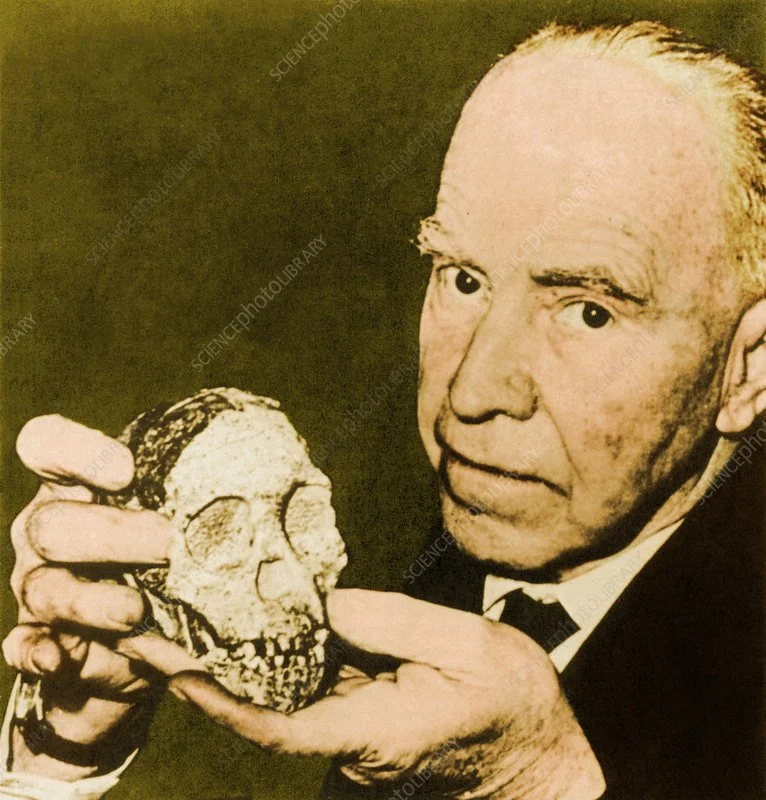
In 1925, a local schoolteacher and amateur collector named Wilfred Eitzman was exploring the caves of the Makapan Valley in what is now Limpopo Province, South Africa. Among the fossil-bearing breccia he recovered was a small, reddish-brown jasperite pebble whose natural markings formed a crude human face. Eitzman immediately noticed the resemblance and showed the stone to the anatomist Raymond Dart, the same Dart who, only months earlier, had announced his ground-breaking discovery of the Taung Child skull and had named a new species Australopithecus africanus.
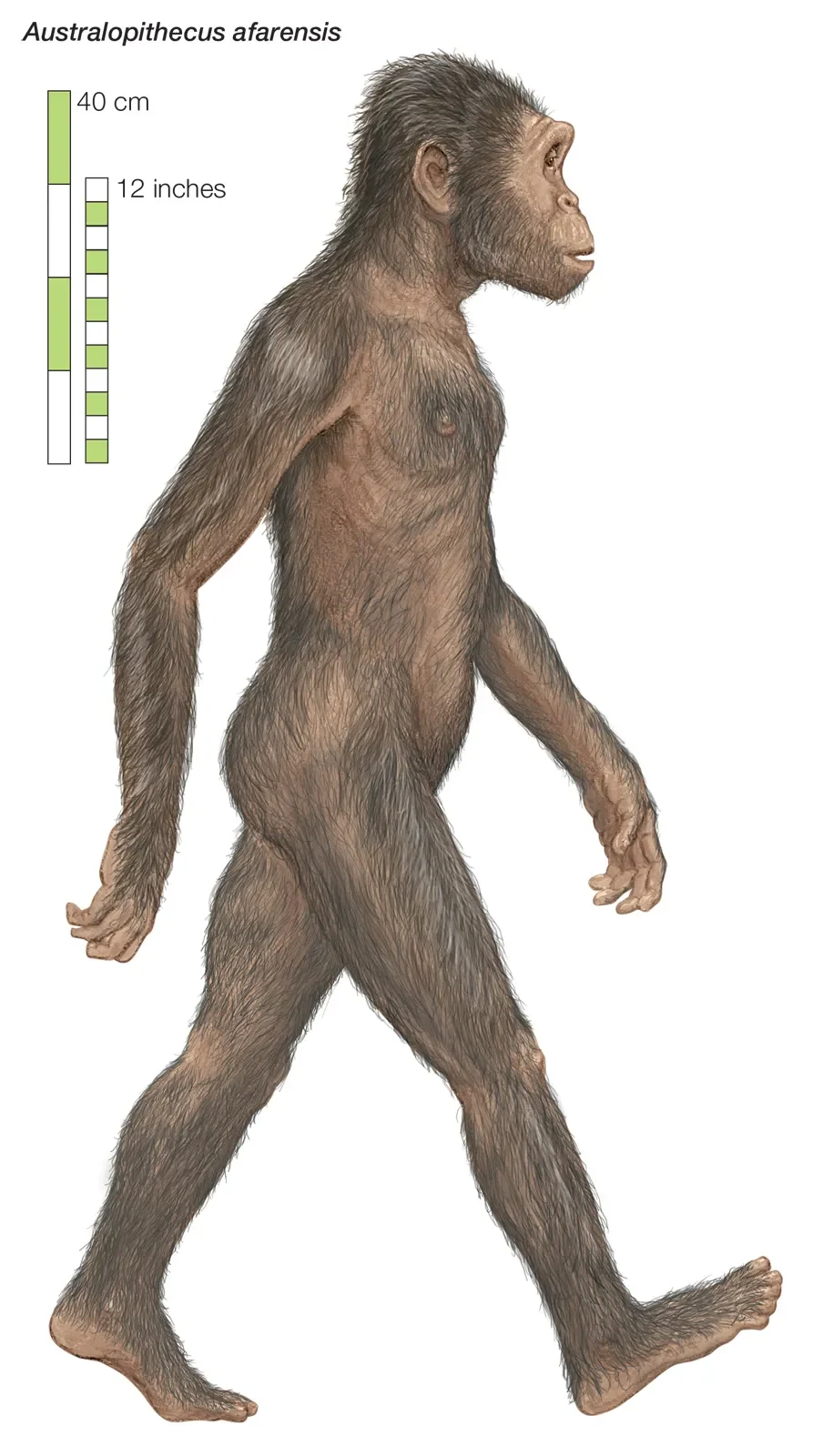
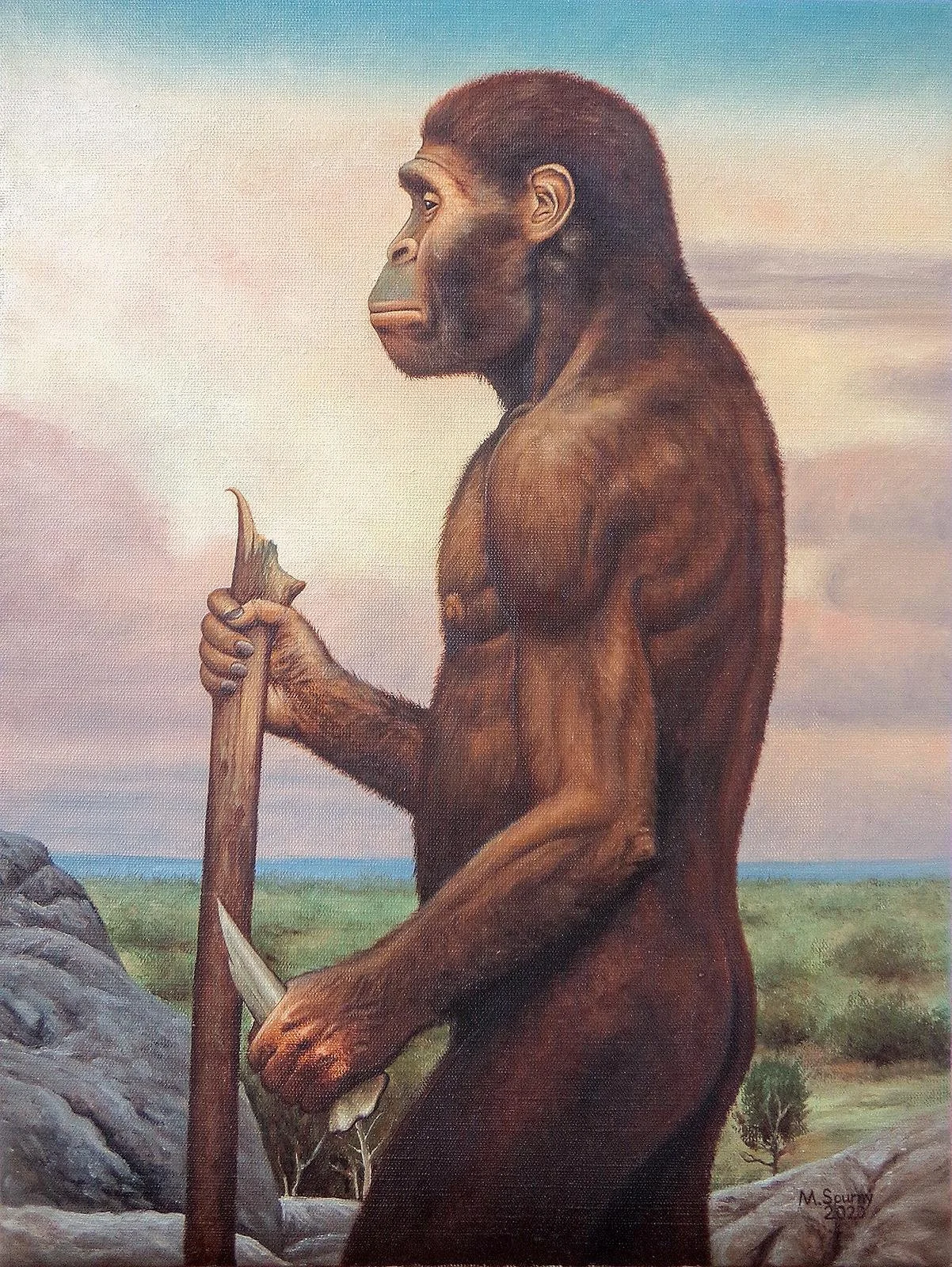
This newly discovered early hominin species lived in southern Africa roughly 3.3 to 2.1 million years ago. The species is such an early ancestor of man that it combined ape-like and human-like traits: a relatively small brain (around 450–500 cc), a projecting face and large jaws, clear adaptations for upright bipedal walking, along with arms still suited for climbing. The species is best known from the Taung Child and from later finds at sites that include Makapansgat.
The geographic setting of the discovery is highly significant. The Makapan Valley belongs to the same broader South African karst landscape that has yielded significant evidence of early human evolution and is often referred to as the “Cradle of Humankind.” Makapansgat—together with sites such as Taung, Sterkfontein, and others—preserves a deep fossil record that includes skeletal remains of australopithecines over a period spanning millions of years.
The Makapansgat Pebble—as it became known—did not create a sensation at the time of its discovery. Dart’s revolutionary claim that the Taung fossil represented a human ancestor was itself met with widespread skepticism well into the 1930s. In the climate of that day, a naturally marked stone carried into a cave by an early hominin received little attention.
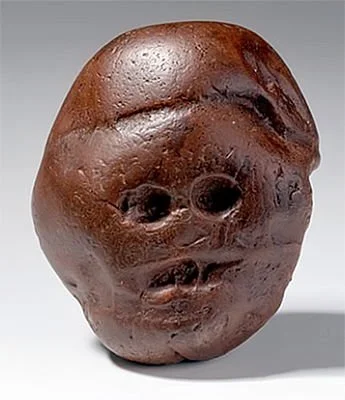

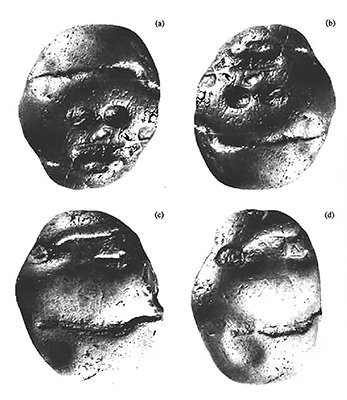
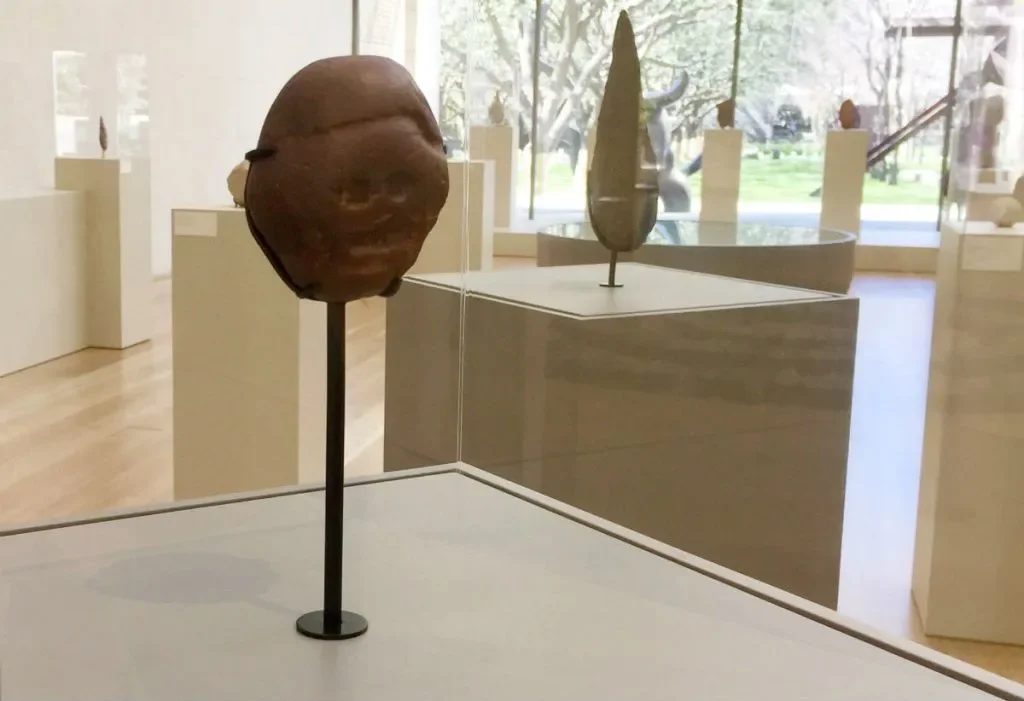
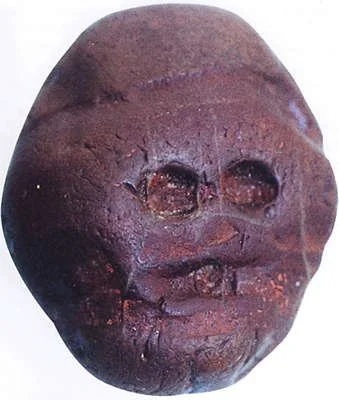
The Makapansgat Pebble is, however, an historic find. Approximately three million years old, it is roughly eight centimeters long (3.3 in.) and weighs about 260 grams (9.2 oz.). It bears natural markings that suggest a crude but unmistakable face: two rounded depressions for eyes, a shallow indentation suggesting a nose, and a wider groove that reads as a mouth. When rotated, other face-like configurations appear. Eitzman himself believed the pebble had been deliberately collected because of its human-like appearance; but the idea remained largely unexamined. Dart admitted in an article published in 1974 that he thought initially the pebble of
…little inherent value, except that the stone had been unquestionably selected from a stream-bed by one of the man-like creatures whose bones have been found
entombed there for decades.
In 1967 Dr. Kenneth Oakly of the British Museum (Natural History) appeared on a Briitish Television program entitled The Roots of Art. He stated that "the Makapan head [represented] an apparent case of recognition of the face of Australopithecus, which could be counted as one of the roots of art."
In 1974, almost fifty years after the discovery was initially brought to his attention, Dart published his first full account of the object. He called it the “Pebble of Many Faces,” and argued that it had been discovered and intentionally collected by its prehistoric discoverer and then transported over a considerable distance to a cave where it lived, most likely with a small social group. Significantly, the stone did not belong to the geology of the cave in which it was found. The pebble, therefore, represents the earliest known instance of an unmodified object being recognized for its extraordinary formal aesthetic properties, collected and, then, carried back to a dwelling area. Dart noted that the closest area to the cave with “comparable geological material” is 20 miles away—more recent studies correct this to three miles.
The first microscopic analysis of the object was conducted by rock-art researcher Robert G. Bednarik in 1997. He confirmed that every feature of the stone is entirely geological—nothing was carved, enhanced, or altered by hand. Nor does the pebble reveal any sign that it was used as a tool. Badnarik concluded that “the object was collected by Australopithecus for its visual qualities.” He then continued—with great insight—that the pebble “conveyed non-inherent properties to its collectors that were imposed by neural processes and involved an incipient form of consciousness.”
It is surprising that the Makapansgat Pebble was not displayed publicly until 2016 when John Giblin, a curator at the British Museum, exhibited the work in South Africa: the Art of a Nation. Giblin characterized the hominin who identified and transported the pebble as “one of the world’s first creators of ‘found art.’” He described the stone itself as “a pre-cursor to true art that some people have called the earliest piece of art of anywhere in the world, the earliest piece of found art.”
The Makapansgat Pebble is remarkable for many reasons, but the period from which it originates is extraordinarily significant for our purposes. It was discovered and collected at a stage of human evolution so early that very little is left to us—especially objects even remotely related to the art instinct. But the Makapansgat Pebble is just such an object.
Far too often academics have considered the pebble and disqualified it as “true art” because it was found and not made. But this places emphasis on the maker, while formalist art history places its emphasis on the viewer—the concentration is on the experience between object and its beholder. Much of the narrative surrounding the discovery of the Makapansgat Pebble provides convincing evidence that the hominem, upon setting eyes on the pebble, and recognizing the stone’s resemblance to itself, enjoyed an immediate, rewarding response from its own nervous system. It is valuable to recall Bednarik’s insights into the pebble: that it “conveyed non-inherent properties to its collectors that were imposed by neural processes…”
Dart, in his 1974 article, states that nothing would have prevented an Australopithecus “from recognising it as anything other than a caricature of one or another of his extremely flat-faced male or female relatives in a positively hilarious mood.” The discoverer may have responded spontaneously and intuitively to that resemblance. One thing is certain: the response was powerful enough to cause it to collect the stone, carry it a considerable distance—despite its lack of utilitarian value—and deposit it in its dwelling.
Why bring it back? One possibility is that it simply wished to keep an object that had given it pleasure. Another, no doubt richer, possibility is that it anticipated sharing with its social group the same puzzlement and amusement that it had enjoyed when discovering the pebble. As Dart observed, once the capacity to detect a face on the stone is granted, the social dimension follows: the pebble would have had limited lasting significance without others in the group comprehending and sharing the emotional reactions the discoverer had experienced. From this, Dart concluded, it may also be deduced that these early hominins “had already reached a humanoid level of self-realisation and self-awareness.”
The Makapansgat Pebble lends us a small and very rare window into an early stage of human evolution. It is, perhaps, the earliest known interaction between human-like beholder and art. The individual who collected it was not a modern human, nor even an early member of the genus Homo. It was an Australopithecus africanus—an early bipedal hominin. At this remote stage of human evolution, complex cultural traditions and social structures of any sophisticated kind simply did not yet exist and exerted little, if any, influence. Yet in an astonishing sequence of events, this hominin selected a stone for its resemblance to itself and caricatured appearance, judged it significant enough to collect despite its lack of any practical value, and transported it many miles back to its dwelling. Here, it is entirely possible he exhibited the stone to the delight of its social group.
If complex tradition or social structure did not inspire and direct this process—what did? The narrative of the pebble strongly suggests the operation of innate, intuitive, biological processes—natural, unmediated responses already present in the primordial brain some three to two million years ago. If this is true, the remarkable story of the Makapansgat Pebble may provide the earliest and most extraordinary indication of the instinct to recognize, collect and exhibit art—millions of years before the origins of our earliest ancestors, Homo sapiens.

Neanderthal Art
Although considered controversial by many, it was hailed as a “landmark” study after its 2018 publication in the journal Science.
In this article, an international team led by archaeologist Alistair Pike, geochronologist Dirk Hoffmann , and archaeologist Paul Pettitt presented findings that permanently altered conventional assumptions about the origins of art.
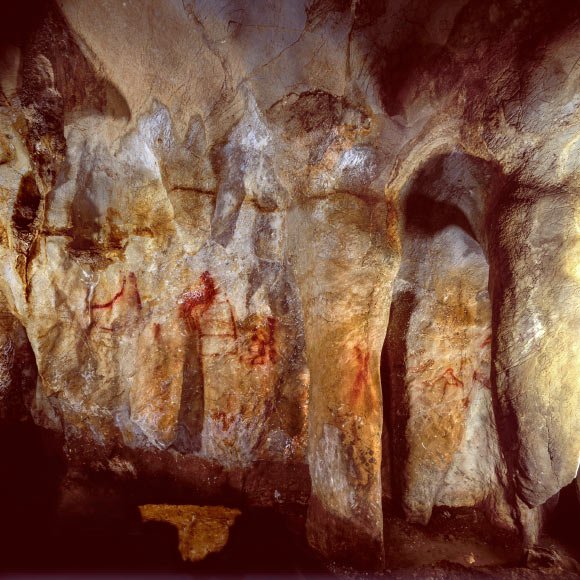
Using uranium-thorium dating of the thin calcite crusts that had formed over pigment, the team established minimum ages for paintings in three Spanish caves:
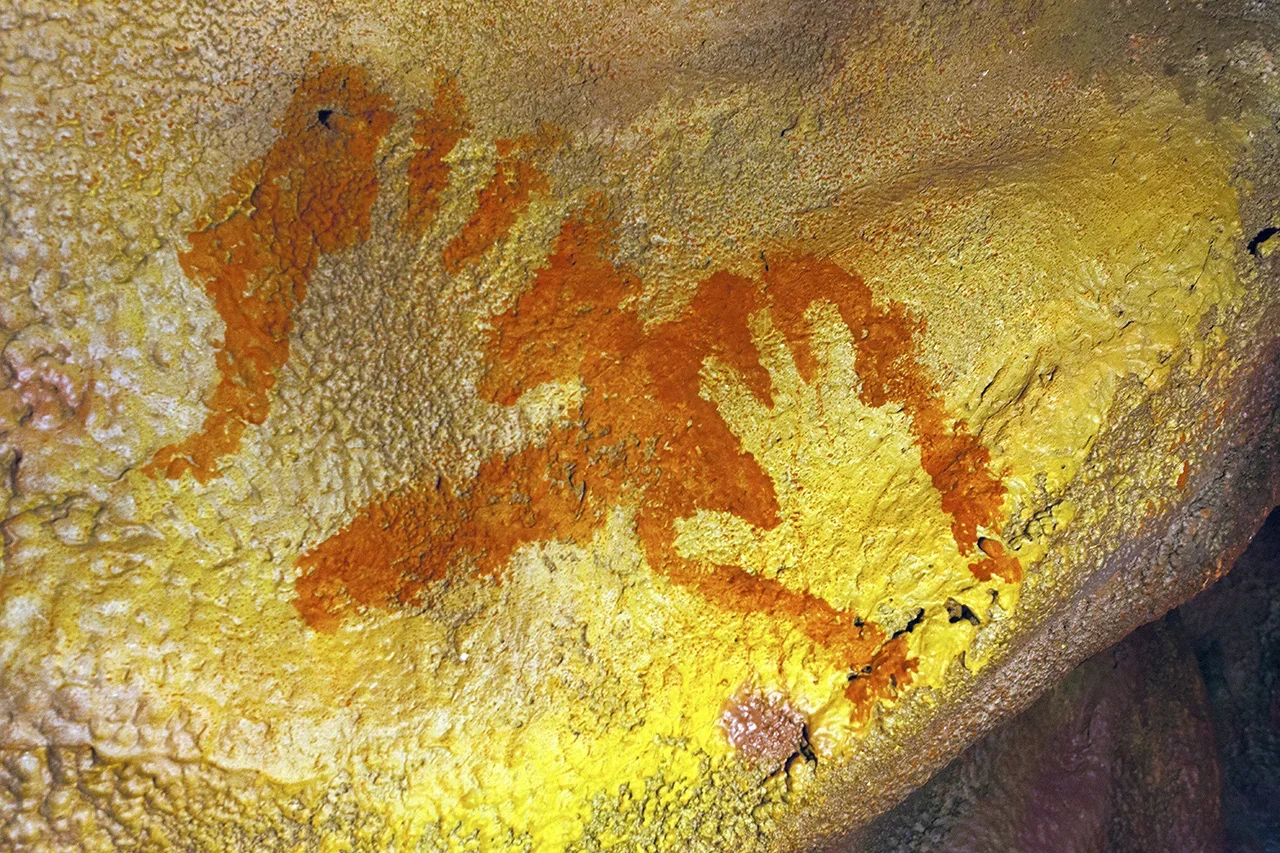
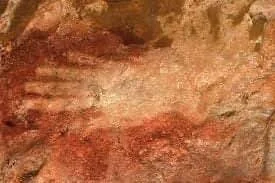
—Maltravieso Cave (Extremadura): a red hand stencil, made by placing a hand against the limestone and spraying pulverized ochre over it—at least 66,700 years old.
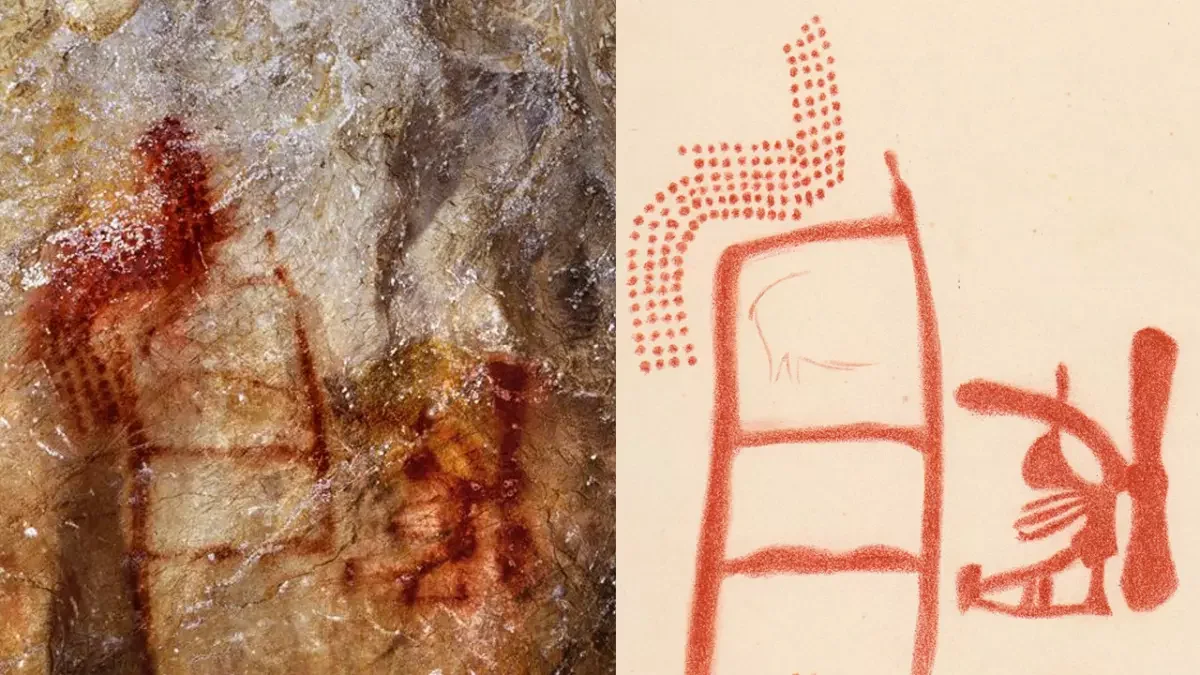
—La Pasiega Cave (Cantabria): a complex ladder-like geometric motif of red lines—at least 64,800 years old.
—Ardales Cave (Andalusia): red pigment applied to stalagmite formations in multiple episodes—as early as 65,500 years ago.
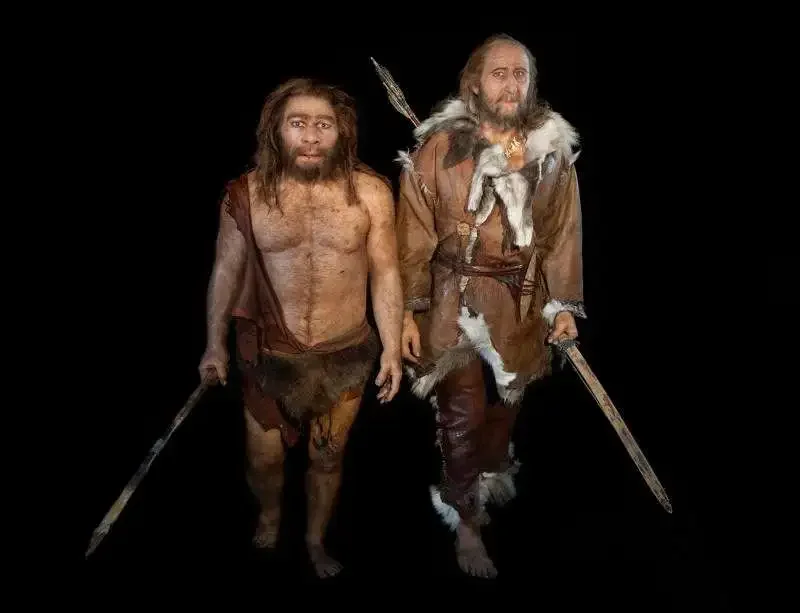
Modern Homo sapiens did not reach Western Europe until roughly 40,000–45,000 years ago. These images were, therefore, made at least 20,000 years earlier. The conclusion drawn by the researchers is as clear as it was shocking: the art was created by Neanderthals.
The discovery exerts significant consequence and confirms an ancient biological reality.
From the 19th century through most of the 20th century, and still widely held into the 2010s, Neanderthals were portrayed by mainstream art history as cognitively inferior to European Homo sapiens. They were often described as brutish, uncultured, and incapable of abstract or symbolic thought. As one of the authors of the 2018 study noted, if you had asked most academics before the new dates whether Neanderthals painted caves, the majority answer would have been an emphatic “no.” Art—especially cave painting—personal ornaments, and other non-utilitarian visual marks were treated as a hallmark of “behavioral modernity,” something that appeared only with modern humans and arose alongside language, ritual, and complex social organization.
In Europe, this was tied to the so-called “creative explosion” that occurred around 40,000–45,000 years ago, when Homo sapiens arrived and later executed the famous painted caves of Lascaux, Chauvet, Altamira and others. The kind of sophisticated representational and abstract art seen in these caves was considered a sapiens specialty.
The 2018 dates shatter that chronology. Neanderthals were almost certainly more capable than the old “brutes” stereotype allowed. It is quite likely they had language and complex social lives; but the deliberate execution of visual art was still widely regarded as beyond them. But the 2018 dates placed hand stencils and geometric motifs to older than 64,000–66,000 years, overturning the traditional chronology and demonstrating that such marks were made in Europe long before Homo sapiens arrived.
Far from being the “dullards” of modern caricature, Neanderthal markings can no longer be explained away as inadvertent scratchings with no symbolic meaning or intent. Neanderthals were far more interested in art-making than previously thought and were quite determined to pursue it. They navigated their way deep into dark caves by the light of crude lamps, enduring countless hardships and life-threatening dangers. They selected and pulverized the precise stone required to prepare the colored pigments they used to make marks on rock surfaces. Many of these marks appear highly organized, and although not yet forming any pictorial image, we may very well discover that the lines, dots, cross hatchings and ladder patterns they made have symbolic meaning.
There can be no question that the Neanderthal ability to translate a three-dimensional hand into a two-dimensional silhouette utilized a technique that required a fair degree of cognitive ability as well as motor skill. These hand stencils demonstrate the development of an ingenious process in which saliva is mixed with pigment in the mouth and blown over a hand that is pressed against a cave wall’s surface. It is quite likely that this reflects a process learned from trial and error. The process not only provided a highly realistic rendering, but its chemistry has proven to be highly resilient to the effects of time. Perhaps this demonstrates that Neanderthals desired their “marks” to be permanent, which would indicate their own satisfaction with the forms they created. The significant point is that all of this was already cognitively part of the artistic repertoire of a species very similar to our own.
The complex nature of the Neanderthals’ art making—the techniques and processes it took to create it—further demonstrates that the drive to make and respond to form resides innately in the human being. Neanderthals were a distinct hominin lineage that had already diverged from our own hundreds of thousands of years earlier. The appreciation of form and the desire to create it is not a bourgeois Western construct, a learned social convention, or an ideological instrument. Man’s fascination with pure form surfaced quite early and predates any other mediating influence. Art originates as a biological capacity that other forces can shape but cannot replace. It is a deep-seated capacity of the hominin brain—an inheritance at least 20,000 years older than scientists previously thought.
The Parallel with Human Children
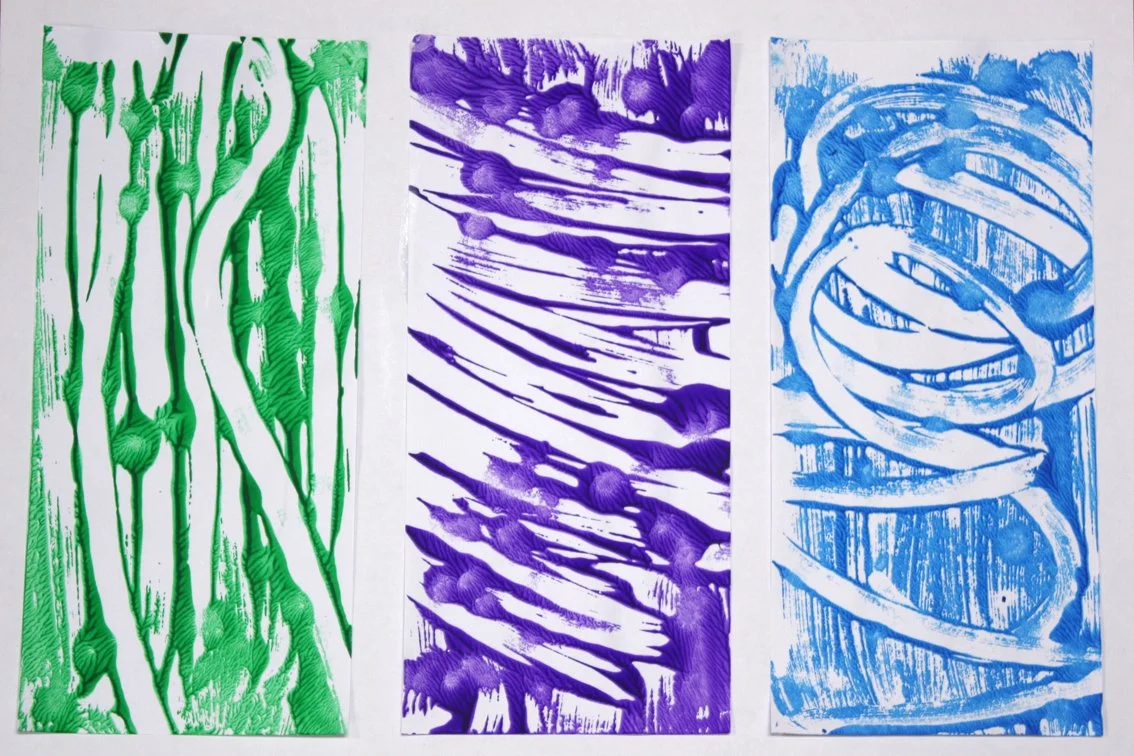
The parallel between Neanderthal mark-making and the behavior of human children is striking. There is abundant evidence that young children begin to make marks spontaneously, without adult prompting or formal instruction. Between roughly 15 and 24 months, toddlers initiate uncontrolled “scribbling.” As motor control improves in the second and third years, these marks become less random and more deliberate.
At this stage, after paper and a marking tool are available, many toddlers make marks unprompted. They appear driven by the sensory-motor experience itself—the pleasure of moving the arm and leaving a visible trace. Classic experiments (including work by Eleanor Gibson and Albert Yonas) showed that infants and toddlers prefer instruments that leave a lasting mark and quickly lose interest in those that do not. Researchers concluded that the motivation is not merely motor exercise but an interest in producing and perceiving a permanent mark.
Rhoda Kellogg and Viktor Lowenfeld, analyzed hundreds of thousands of children’s drawings from many countries, and identified a consistent, cross-cultural development: random scribbles give way to controlled repetitive lines and loops, and, then, to basic forms (circles, lines, crosses), and eventually to more pictorial images. Dozens of studies confirm that as children age they reveal a steady development toward greater control of marks, which occurs between approximately 12 and 36 months. This pattern emerges without prompting. Adult encouragement or collaboration increases the frequency of mark-making, but the underlying impulse does not require it.
Children are captivated by the simple fact that they have created a deliberate mark where none existed a moment before. They are not encoding social messages. They are responding to a basic human fascination with deliberate form—an evolutionary trait that appears already in our deep past.
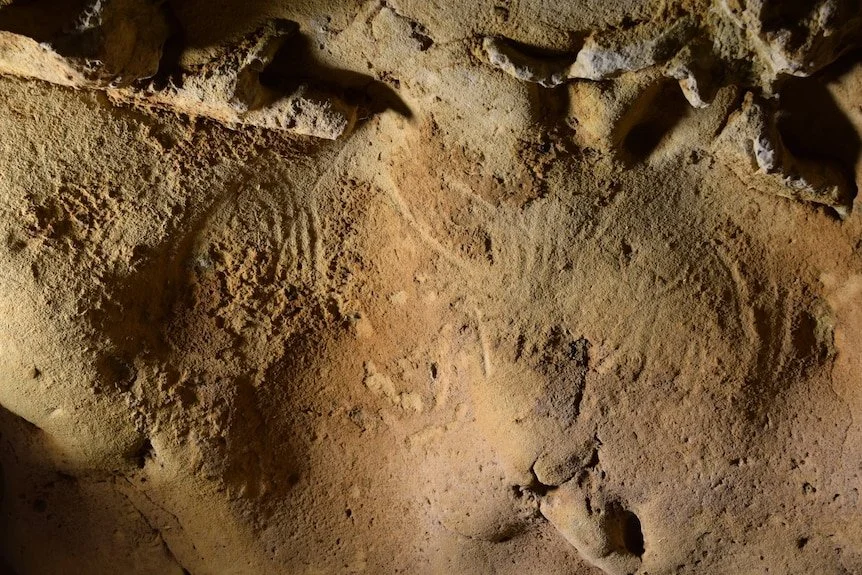
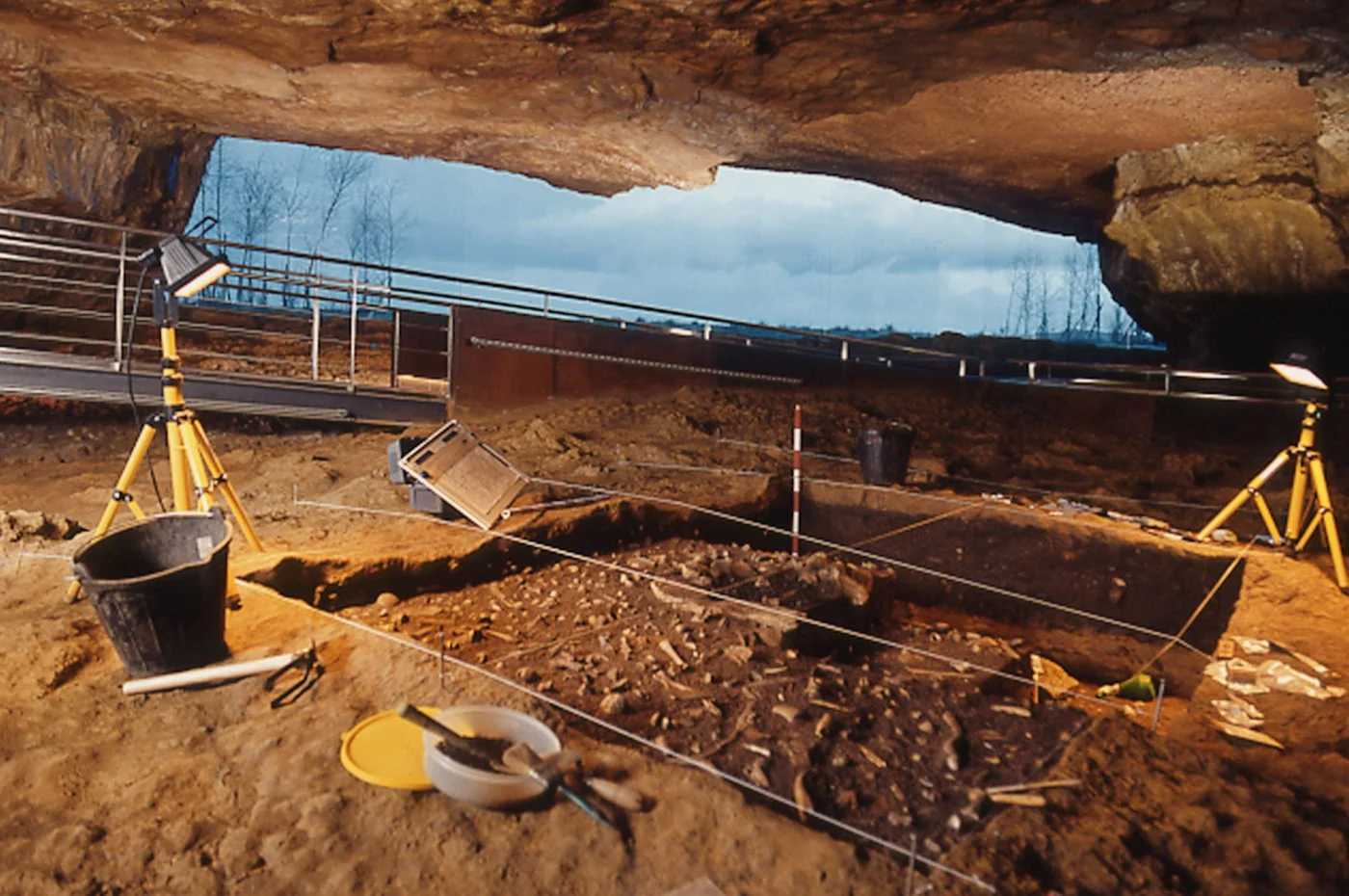
In the cave of La Roche-Cotard located in central France, Neanderthals left finger flutings traced into the soft layer of sand and clay that coated the cave walls. The entrance to the cave was sealed off some 57,000 years ago by the sediment deposited by the rise and fall of a nearby river. This closure made the chamber inaccessible and preserved the marks for tens of thousands of years. It also sealed Neanderthal tools inside, allowing the finger flutings to be dated. Scientists have recognized that they are among the earliest Neanderthal cave engravings known.
What is useful for our purposes is that the innate impulse to leave a mark—a deliberate trace where none existed before—is present in both toddlers and Neanderthals. Both use the hand as a tool to make a mark on a surface. The paintings utilize the hand either as a stamp or stencil; in finger fluting, the finger becomes a stylus. The key is that both Neanderthals and young children are captivated by their contact with a surface creating form. There is also a clear interest in making gesture become visible. The earliest dated Neanderthal images and the earliest childhood images belong to the same primitive vocabulary, and both are stemming from the same innate, biological impulse. Neither is waiting on ideology. The vocabulary we see is expanded in the Paleolithic cave paintings that come later, but the instinct that drives the development is exactly the same.


From Mark-Making to Sanctuary
If Neanderthal art establishes that the impulse to create form is biological, the great Paleolithic sanctuaries of Lascaux, Chauvet, and Altamira reveal a different, fundamental fact: humans going back more than 35,000 years possessed a deep, innate need not merely to make images but to encounter them, perhaps as sites of visual transcendence.
The deep chambers of caves that bear Paleolithic painting reveal almost no trace of domestic life—cooking, tool-making, and sleeping. Such activities remained at the mouths of caves that could enjoy hours of daylight. Painted galleries are deliberately set apart from living areas, and although many were visited for hundreds, perhaps thousands, of years, they were kept, for the most part, meticulously clean—bearing hardly a trace of refuse, campfires, or remains of either humans or animals. In only a few instances, objects or bones have been pressed into cracks of walls, apparently as offerings.
Many of these caves had limited visitation, while others show repeated use over many years. There is surprising evidence that not only did artists and select members of their social group visit these caves, but footprints of adults, children, and adolescents are preserved in the clay floors of caves such as Niaux and Pech Merle. It is not uncommon to find dozens to hundreds of footprints in caves; Ojo Guareña is documented to contain more than 1,000 footprint impressions. This indicates that the chambers were visited by a diverse cross-section of Paleolithic communities.
The overall cleanliness of the sites has led many researchers to believe they were “special destinations.” Reinforcing this belief is the difficulty required to reach these painted galleries, which are often separated from cave entrances by considerable distances. Hand stencils only recently documented in Altamira were painted over 200 meters from the cave’s mouth. This forces the viewer to begin each visit with an arduous, quite dangerous journey that required crawling through narrow, dark passages by the dim, flickering light of fat-burning lamps or torches. This appears intentional. Jean Clottes, the leading authority on Chauvet, emphasizes that the darkness of the cave environment and the danger of simply accessing the gallery may have created a sense of anticipation for the experience to come. Certainly, the isolation of the locale separated the viewer from ordinary life, and mystery was part of this experience from the moment the viewer embarked on the journey into the dark void ahead.
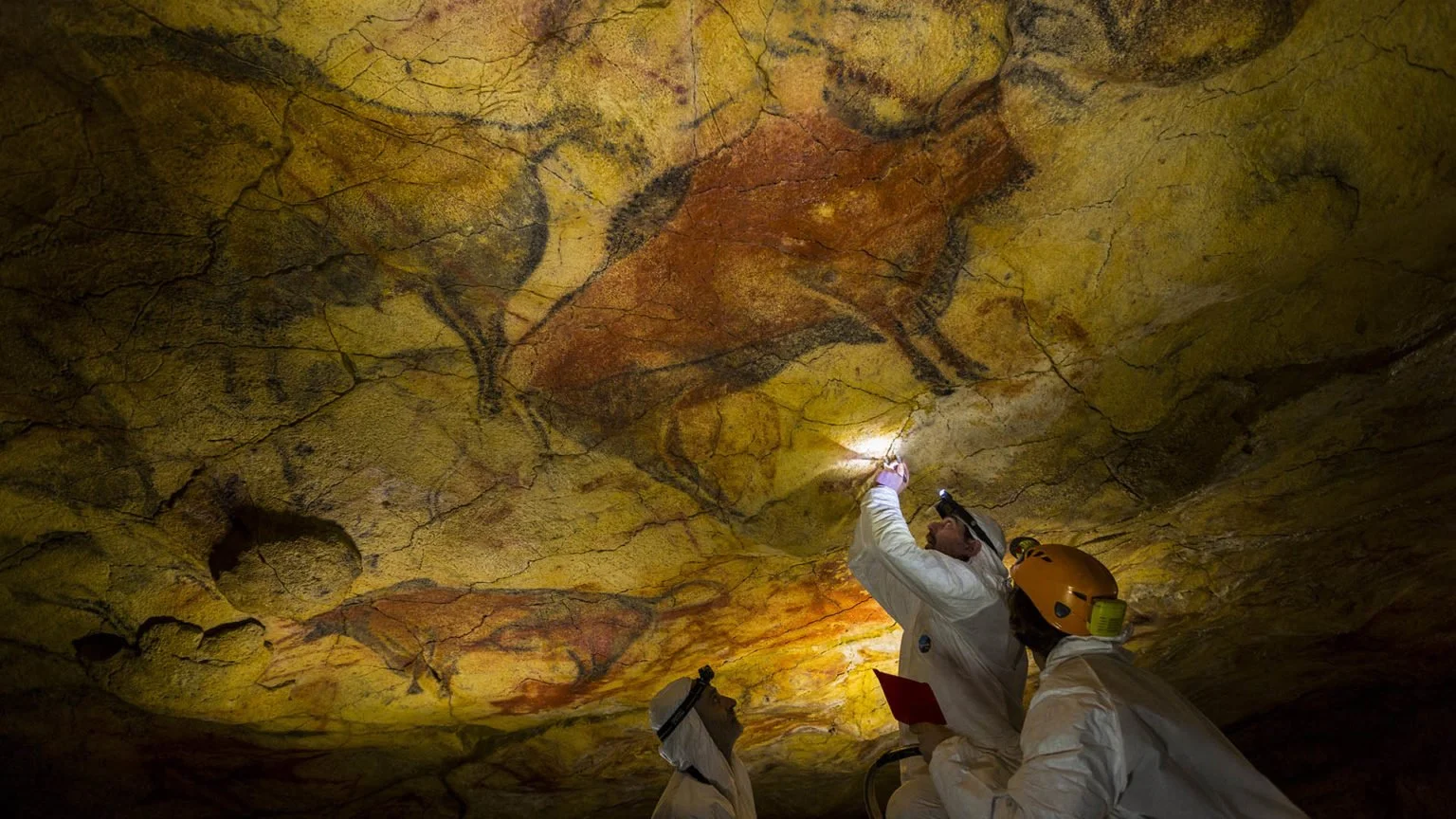
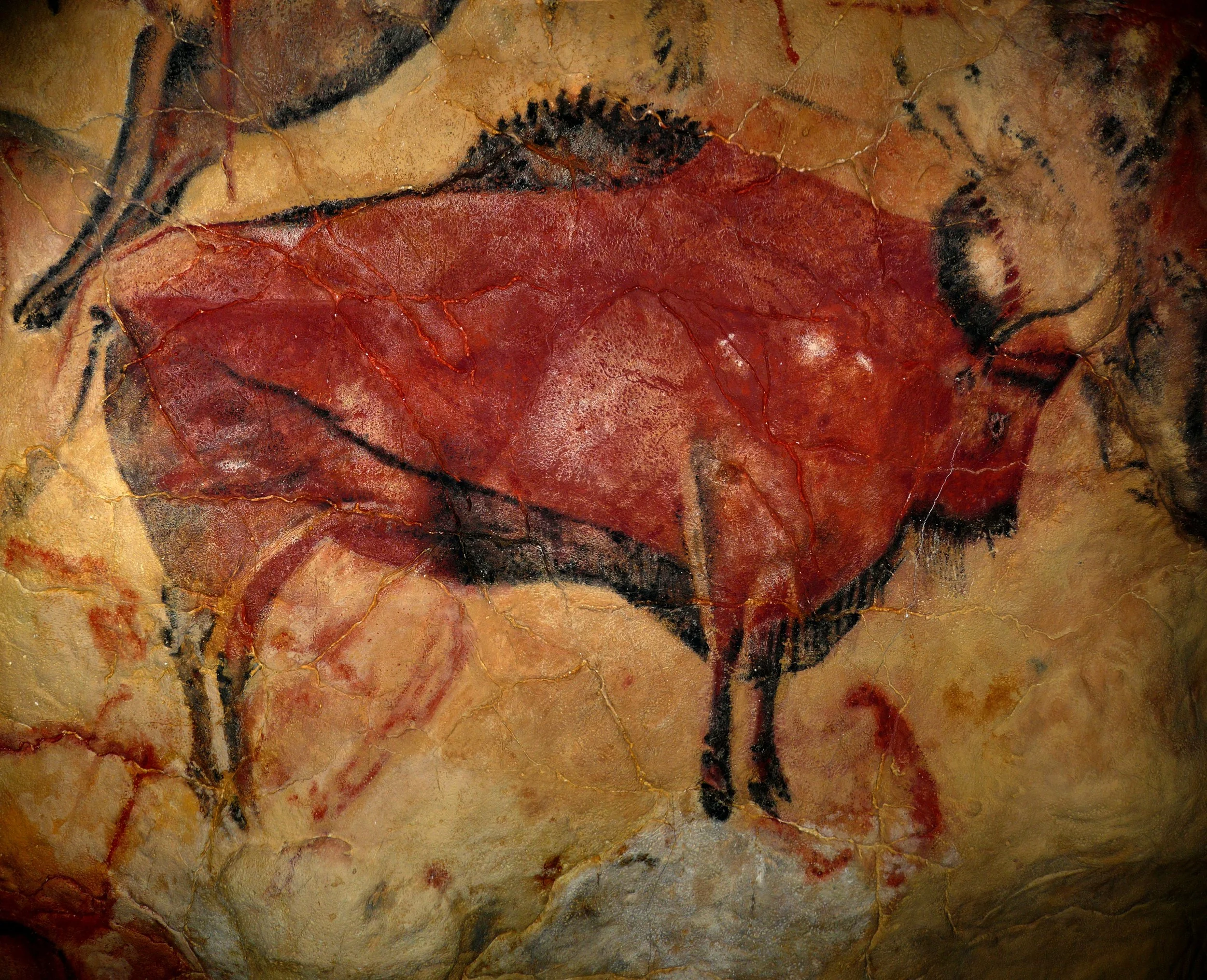
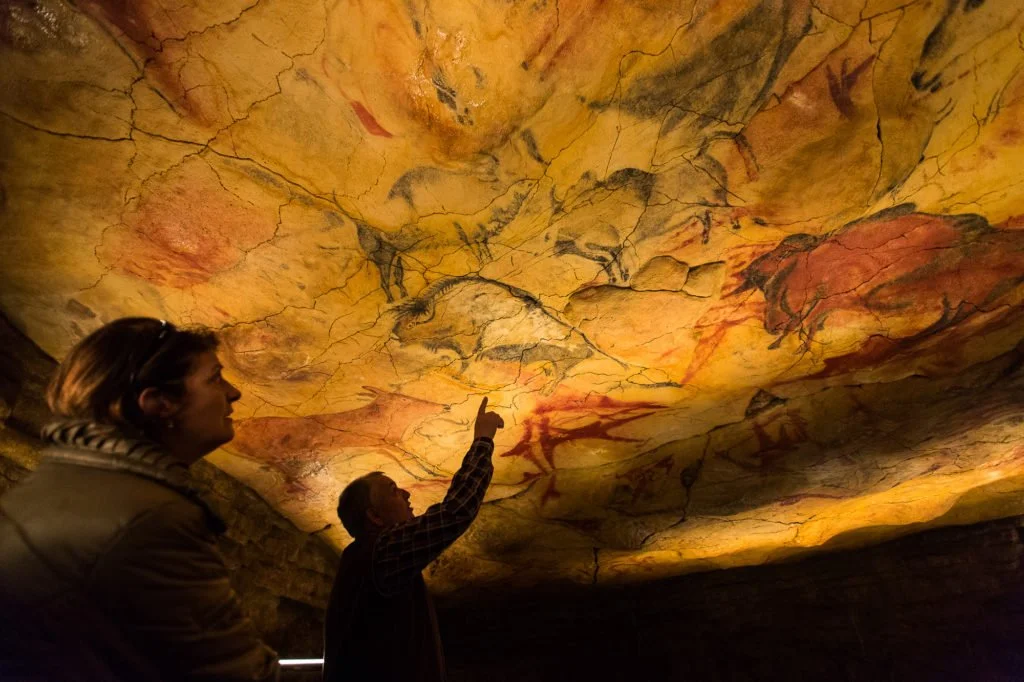
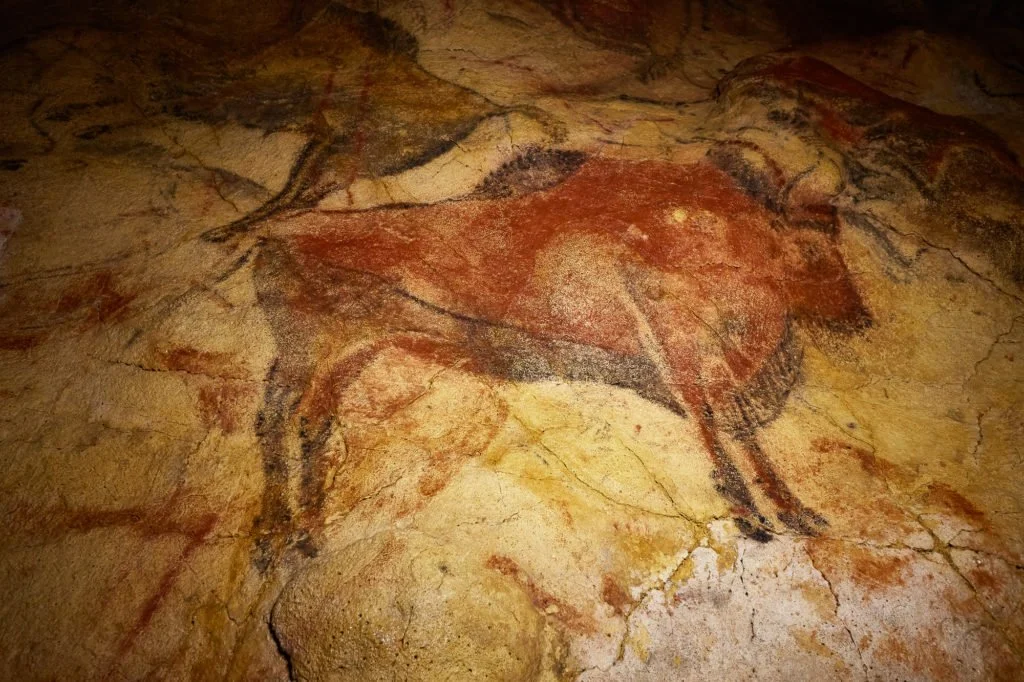
The paintings of the three primary caves of Altamira (Spain) span a considerable period, with the oldest dating to over 35,000 years ago. The most famous of the caves is the Grand Hall with its polychromed ceiling bearing 25 renderings of steppe bison, horses and deer. Executed in mineral pigments of red, black, and violet, they are of such exquisite beauty that writers have described the cave as “man’s first cathedral” and “the Sistine Chapel of Paleolithic art.” Painted between 17,000 and 12,000 years ago, the images on the upper vault belong to the final culture of Europe’s Upper Paleolithic era.
Marcelino Sanz de Sautuola—whose young daughter discovered the bison paintings on the gallery ceiling—was the first to publish research about Altamira cave in 1880. A Spanish nobleman who held no scientific or academic post, de Sautuola’s placement of the paintings to the Paleolithic era sparked a highly publicized debate with experts, who considered the images too advanced for such an early date. When proven correct years later, de Sautuola was recognized posthumously for his methodical research. His observations of the paintings contain great insights and emphasize the artist’s extraordinary formal mastery: “One can see that the author was very practiced in making them, for it is observed that his hand must have been firm and did not hesitate; on the contrary, each stroke was made in one go with all possible cleanliness, given such an uneven surface as the vault…”
Altamira’s main gallery is a confined space, and its paintings are rendered with such realism that the consensus is they were executed by a single experienced practitioner. Painted on the irregular stone face of the cave’s vault, the renderings incorporate the natural relief of the rock to increase the salience and naturalism of the animals and, perhaps, to suggest that they are emerging from the cave walls. Contours—more than likely made from memory—are uninterrupted, controlled, and rendered with smooth, highly accurate precision. The internal modeling of the animals is composed of rich and varied hues; the soft modulations of tone are blended and often smudged, increasing the illusion of three dimensions. When seen by the flickering light of a lamp or torch, the paintings on the vault above must have seemed alive and in motion to the Paleolithic viewer.
This “maestro of the polychrome ceiling” must have refined his skills through hours of intense, concentrated observation. It is also possible that the graphic skill he displays was practiced while painting animals and related motifs on animal skins prepared for use as tent covers, furnishings, clothing, and containers. It is reasonable to suppose—and often forgotten—that Paleolithic life occurred in an environment already rich with form, and that art may have been woven into the very texture of daily routine.
This may shift our present perspective on how cave painting was approached by visitors. A visit to a hidden chamber deep in the recesses of a cave was an exceptional experience—the opportunity to witness a real spectacle. The mystery of the cave environment and the scale and naturalism of the paintings themselves represented a more expressive and impactful version of something already present in the community’s environment. People who lived among painted skins would already have possessed the habit of experiencing form. Their eyes were trained, and a visit to a sanctuary deep in a cave did not invent the appetite for form; it concentrated it.
Viewers of that era may have been as startled by the mastery of the Altamira paintings as the modern viewer is today (albeit from photographs). There is a significant body of research that approaches the Paleolithic cave experience as a place of deep spirituality—possibly shamanic ritual—involving transcendence and altered consciousness. Other scholars prefer more restrained interpretations, but the majority agree that these spaces were “sanctuaries”: places reserved for practices outside everyday life, in which realistic painted images played a central role.
Altamira demonstrates that long before institutional religion or written liturgy, human beings sought out environments engineered to display images, and which offered a respite from the demands and stresses of daily survival. The paintings were not instruments of practical utility or political messaging; they were created to produce a particular kind of experience in an environment designed to heighten their expressive potential. That need—to encounter form, not merely make it—is as old as the impulse to leave a mark. The Paleolithic painted sanctuaries do not invent the instinct. They intensify and heighten it.